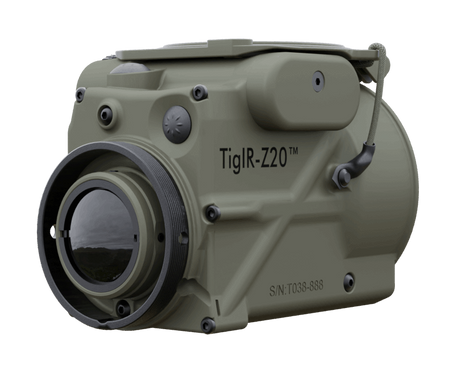


TigIR-Z20
Versandinformationen
Versandinformationen
Versand innerhalb Deutschlands:
6,99€
Versandkostenfrei ab einem Warenkorbwert von mind. 99,-€
Versand innerhalb der EU und Partner
(EU, Kanada, USA, Australien, Neuseeland):
15,-€
Versandkostenfrei ab einem Warenkorbwert von mind. 99,-€
Versand außerhalb der EU:
50,-€
16 Products go well with this item
-

TILO Battery Charger 16650
-

Video grabber
-

TigIR magnifier eyepiece 2.5x
-

Duo-Connector M52x0.75 with Clamp TigIR
-

Rechargeable Battery 18650
-

TigIR Tripod Rail 36mm
-

TigIR External Power Cable
-

TigIR Video Cable
-

TigIR Video and Power Cable
-

TigIR Spare Front Flap
-

ERATAC Picatinny Mount
-

TigIR pouch olive
-

Lithium CR123A Battery
-

Rusan adapter M52x0.75
-

Precise hunting clamping sleeve
-

Double clamp


TigIR-Z20
Description
Description
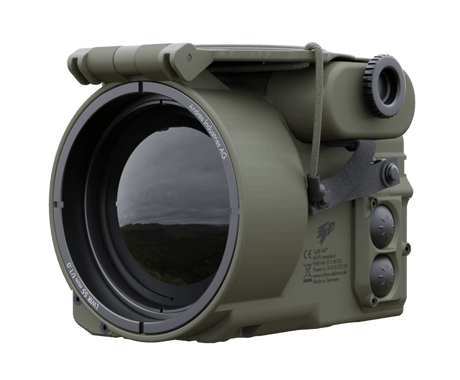
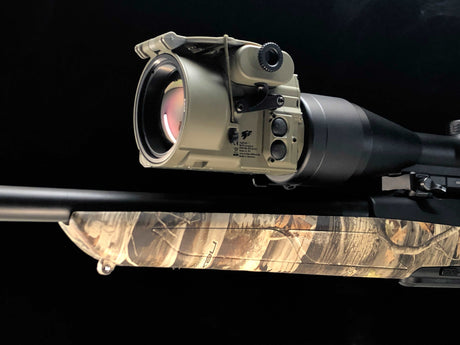
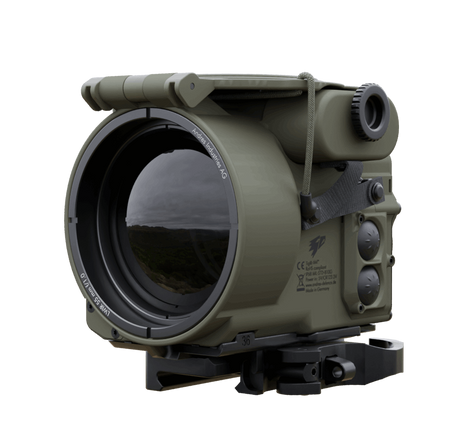
The TigIR-Z20™ is currently the lightest and smallest thermal imaging device with a 55 mm lens. No other device achieves a range (standing person) of 3000 m with such a short overall length of only 112 mm. These compact dimensions were made possible by the development of a specially folded eyepiece. This allows the device to be used with various optics (3-6x magnification) and similar systems without any loss of image quality. The entire housing is milled from a single piece of high-strength aluminum, hard-anodized, and finished with a highly resistant Cerakote coating. This allows the TigIR™ to withstand even hard impacts in harsh environments – while remaining remarkably lightweight at only 527 g.
Specification
Specification
-
Abmessungen112 mm, 82 mm, 80 mm
-
Gewicht
-
Material
-
Schutzklasse
-
Temperaturauflösung
-
Sensorauflösung
-
Bildschirmauflösung
-
Videoausgang
-
Zoomstufen
-
FOV
Lieferumfang
Lieferumfang
Hinweis
Hinweis
Informationen Produktsicherheit
Informationen Produktsicherheit

40mK
20mK
-
-
-
-
-
-
-
Only for authorities
-
-
Only for authorities
-
-
Only for authorities
-
-
-
-
-